Sidr, the Sacred Lote Tree: From the Utmost Boundary of Heaven to the Gardens of Paradise
 Azra ZKOctober 25, 2026

The Sacred Seal of the N° 99 Collection
At the edge of the seventh heaven stands a tree.
The Archangel Gabriel went no further.
Beyond it lay the presence of the Divine.
This is Sidrat al-Muntaha, the Lote Tree of the Utmost Boundary. And on earth, its living reflection is a humble, evergreen desert tree that has been honoured for more than three thousand years: Sidr.
Some botanicals are ingredients. Some are inheritances. Sidr is something more. It is a sacred tree, planted beside holy places, laid in royal tombs, named in revelation and carried into the most intimate rituals of human life: the washing of the body, the preparation of the bride, the farewell to the departed. This is its story, and the reason it rests at the heart of every House of Excelsior creation.
What Is Sidr?
Sidr is the Arabic name for Ziziphus spina-christi, known in English as the Lote tree or Christ's thorn jujube. It is an evergreen tree of the buckthorn family, a close cousin of the jujube, native to the Levant, the Arabian Peninsula, Mesopotamia and North and East Africa.
It thrives where little else can: in heat, in drought, in stony desert valleys, sending its roots deep in search of water. Its branches carry paired thorns, one straight and one gently hooked. Its glossy oval leaves stay green through the fiercest summer. In the cooler months it blossoms with small, pale, honey-scented flowers that draw bees from across the desert, followed by golden fruit known in Arabic as nabq. Some Sidr trees are believed to have stood for well over a thousand years.

It offers shade where there is little shade, fruit where there is little fruit, and green where the land is mostly stone and sand. Perhaps that is why, across the millennia, people have looked at this tree and seen something more than a tree.
Sidrat al-Muntaha: The Lote Tree of the Utmost Boundary
Of all the trees named in sacred scripture, few stand in a place so exalted.
In Surah An-Najm, the Qur'an describes the Prophet Muhammad ﷺ beholding the Angel Gabriel a second time "at the Lote Tree of the Utmost Boundary, near which is the Garden of Abode" (53:14–15). In that moment, the tree was covered in a splendour beyond description (53:16). The Prophet's sight did not waver, nor did it stray, and there he saw some of the greatest signs of his Lord (53:17–18).
The tradition of the Isra' and Mi'raj, the Night Journey and Ascension, tells how the Prophet ascended through the seven heavens with Gabriel until they reached this tree. There, at the furthest limit, Gabriel stopped. The Prophet continued alone into the Divine presence, and it was beyond the Lote Tree that he received the gift of the daily prayers for his community.
Why the "Utmost Boundary"? The great commentators of the Qur'an have reflected on this name for centuries. Shaykh Abdul-Rahman al-Sa'di explained that it is called the Boundary because all that ascends from the earth, and all that descends from God, including revelation itself, reaches its end there. Abdullah Yusuf Ali described it as the limit of heavenly knowledge revealed to creation, beyond which neither angel nor human may pass.
The hadith of the Night Journey, recorded in Sahih al-Bukhari, offers a glimpse of its majesty: its fruits were like great earthen jars, its leaves like the ears of elephants, and from its roots flowed four rivers, two hidden and two manifest, the manifest rivers being the Nile and the Euphrates.
A tree at the threshold between creation and the Creator. A tree at which even the angels pause.
The Lote Tree marks the boundary of all that can be known, and the beginning of all that can only be revered.

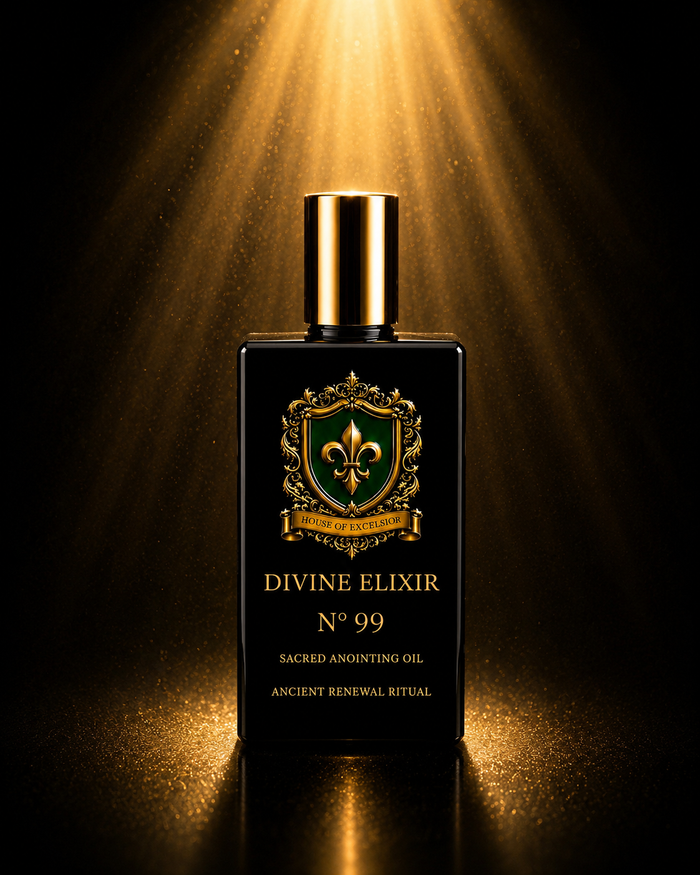
Luxury Sidr & Black Seed Anointing Oil with Frankincense, Myrrh, Spikenard, Damask Rose, Oud & Saffron
$333.00
Sidr in the Qur'an: Four Sacred Mentions
The Arabic root of Sidr, sīn dāl rā, appears four times in the Qur'an, and each time the tree stands at a threshold.
At the edge of the heavens. Twice in Surah An-Najm (53:14 and 53:16), as Sidrat al-Muntaha, the Lote Tree of the Utmost Boundary.
In Paradise. In Surah Al-Waqi'ah (56:28), the people of the right hand are described among thornless lote trees, the Sidr of Paradise freed of every thorn. This is where the name we cherish comes from: Sidr, the Lote Tree of Paradise.
In the story of Saba. In Surah Saba (34:16), a few lote trees remain among what is left when the flourishing gardens of Sheba are lost: a reminder of what endures after abundance has passed.
A tree at the edge of heaven, in Paradise, and among what remains on earth. Few botanicals carry such weight.
Sidr in the Prophetic Tradition
The hadith collections preserve some of the most tender images of Sidr in human history. When a daughter of the Prophet Muhammad ﷺ passed away, the women who prepared her were instructed to wash her with water and Sidr, an account recorded in Sahih al-Bukhari. The same instruction was given for a pilgrim who passed away in the state of ihram, so that he would be raised on the Day of Resurrection still in his pilgrim's devotion.
And when Qays ibn Asim embraced Islam, he was told to bathe with water and Sidr: a washing that marked the threshold of a new life, recorded in the collections of Abu Dawud, al-Tirmidhi and al-Nasa'i.
A washing at the beginning. A washing at the end. Sidr stands at both thresholds.
The reverence endured for centuries. When the explorer Richard Burton journeyed to Madinah in 1853, he recorded an ancient Sidr tree growing within the Prophet's Mosque, in the garden honoured in the name of Fatimah. Its fruit was given to pilgrims, and its leaves were used for the sacred washing of the departed.
Sidr in Ancient Egypt: The Nebes Tree
Long before it entered the language of revelation, Sidr was already sacred along the Nile. To the ancient Egyptians it was the nebes tree. Its fruit appears on the offering lists and banquet scenes painted inside tombs of the Old Kingdom, and dried Sidr berries have been found in burials reaching back to the predynastic era, before the age of the pharaohs. Specimens were even placed among the burial provisions of Tutankhamun.
Its dense, enduring wood was shaped into coffins, boats and fine joinery. In later centuries the nebes was counted among the sacred trees of Egypt and associated with Sopdu, the falcon god who guarded the eastern frontier. The Greek botanist Theophrastus would later write admiringly of its sweet fruit.
A Witness in Christian Memory
In Christian tradition the same tree carries another name: Christ's thorn jujube, and its botanical name, spina-christi, means "thorn of Christ". Some traditions hold that its thorny branches formed the crown of thorns.
In Ir Ovot, in the south of the Holy Land, stands one of the oldest known Sidr trees, estimated at 1,500 to 2,000 years old and locally honoured as a living witness to that tradition.
One sacred tree, held with reverence across faiths, languages and centuries.
Sidr Leaves: The Original Sacred Wash
Long before the modern bathroom cabinet, there was Sidr.
Its leaves were gathered, dried and ground into a fine green powder, known today as Sidr powder, then mixed with warm water to wash the hair and body. Sidr leaves are naturally rich in saponins, plant compounds that create a soft, gentle lather, and in mucilage, which lends a silken feel to the hair. Across the Arabian Peninsula and North Africa, Sidr leaf was the original shampoo: used to wash the hair, to prepare brides, and to mark rites of passage, blessing and protection.
Its blossoms feed the bees that make Sidr honey, gathered in the ancient valleys of Yemen such as Wadi Do'an in Hadramawt, and treasured as one of the rarest and most precious honeys in the world.
Across these traditions, Sidr carries the same quiet meaning: purification, protection and blessing. A cleansing that is not only of the body, but of the moment. A way of marking a threshold. A way of beginning again.
The Light of Qatar
In Qatar, the Sidra is honoured as the national tree, an emblem of perseverance and nourishment that has grown in the desert for generations. Travellers and scholars once gathered in its shade to rest and share knowledge. Today it is the emblem of Qatar Foundation, which describes the tree as rooted in this world while reaching toward perfection, and its branching form inspired the façade of the Qatar National Convention Centre in Doha, a structure some 250 metres wide.
From the tombs of the Nile to the skyline of the Gulf, the Sidr tree is still honoured as it always has been: as a symbol of what endures.
Why Sidr Is the Heart of N° 99
When I began the research that would become Divine Apothecary, Sidr kept returning. In texts, in traditions, in the rituals of washing, blessing and remembrance.
It became clear that Sidr could not simply be one ingredient among many.
It had to be the seal.
Today, Sidr is the sacred seal of every House of Excelsior creation. Organic Sidr leaf is infused slowly, over nineteen days, before each formulation is completed. It is the living botanical thread that runs through the entire N° 99 Collection, and the first note of the House of Excelsior Signature Accord: Sidr, Frankincense, Myrrh and Damask Rose.

Nineteen days is not a shortcut. It is the time it takes for the leaf to give its green spirit fully to the oil, the way the tree itself gives slowly, season after season.
Sidr Across the N° 99 Collection
Divine Elixir N° 99 is our Sidr anointing oil and luxury Sidr botanical oil for body, hair and soul, where Organic Sidr is infused for nineteen days in Certified Organic Black Seed Oil and Mediterranean Olive Oil with nineteen ancient botanicals, including Frankincense, Myrrh, Spikenard, Oud and Saffron.
Divine Attar N° 99 is our Sidr attar: an alcohol-free extrait de parfum attar perfume oil where Sidr meets Oud, Saffron, Damask Rose, Frankincense and Myrrh. A modern expression of an ancient tree, worn at the pulse points as a sacred scent for the soul.
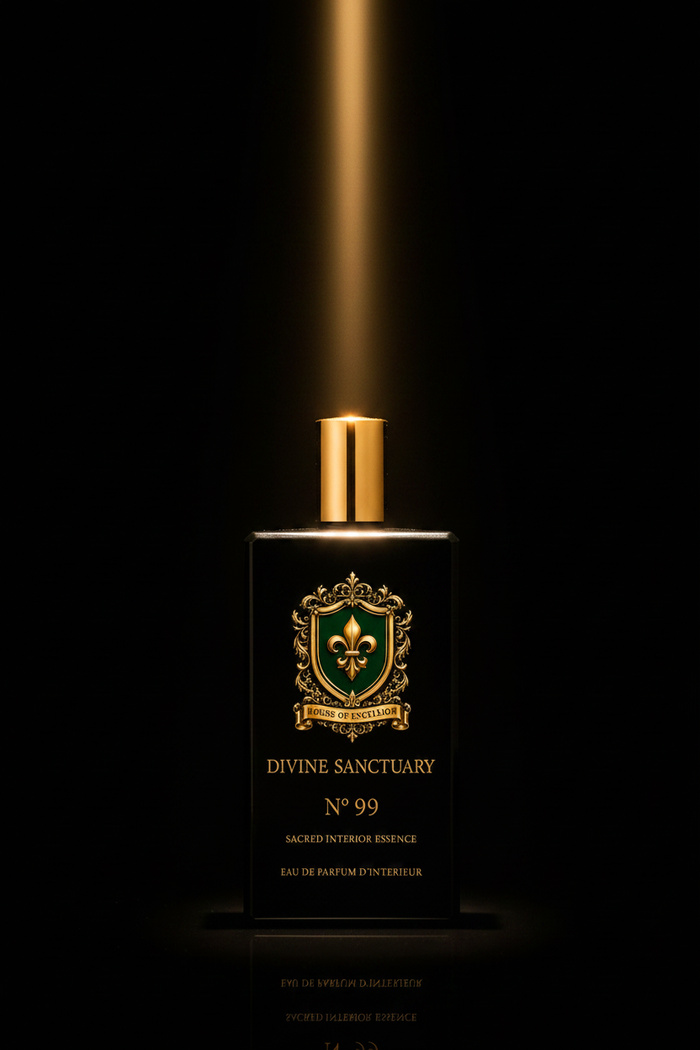
Divine Sanctuary N° 99 is our Sidr room spray, a Sacred Interior Essence: a vibrant green Sidr infusion united with nine sacred botanical oils, for blessing the home and the spaces we live in.
Divine Bath N° 99 carries whole Sidr leaves through six ancient mineral salts, a ritual immersion that echoes the ancient practice of washing with water and Sidr.
Divine Infusion N° 99 brings Sidr leaf into the daily cup, alongside eight organic herbs of Balkan household tradition.
The Tree Remains
Empires have risen and fallen around the Sidr tree. Languages have changed. Borders have moved.
Yet the tree remains, rooted deep, green in the desert, still offering shade. And above it, at the edge of the heavens, its reflection still marks the boundary between all we can know and all we can only revere.
Perhaps that is its oldest teaching. That what is rooted in what is true can endure anything.
And that it is always possible to return.
Frequently Asked Questions
What is Sidr?
Sidr (Ziziphus spina-christi), also known as the Lote tree or Christ's thorn jujube, is a sacred evergreen desert tree native to the Middle East and North and East Africa, honoured for over 3,000 years in traditions of purification, protection and blessing.
What is Sidratul Muntaha?
Sidrat al-Muntaha, often written Sidratul Muntaha, means "the Lote Tree of the Utmost Boundary". In the Qur'an (53:14–16) it is the tree at the furthest limit of the heavens, where the Prophet Muhammad ﷺ saw the Angel Gabriel during the Night Journey and Ascension.
Where is the Lote Tree?
In Islamic tradition, Sidrat al-Muntaha stands beyond the seventh heaven, at the boundary beyond which no created being passes. On earth, the Sidr tree grows across the Middle East and North and East Africa, and is the national tree of Qatar.
Where is Sidr mentioned in the Qur'an?
The Arabic root of Sidr appears four times: in Surah Saba (34:16), twice in Surah An-Najm as Sidrat al-Muntaha (53:14 and 53:16), and in Surah Al-Waqi'ah (56:28).
Is Sidr the same as jujube?
Sidr is a close relative of the common jujube and belongs to the same genus, Ziziphus. Its fruit, called nabq in Arabic, is smaller and has been eaten across the Middle East and North Africa since antiquity.
What are Sidr leaves used for?
Traditionally, Sidr leaves were dried and ground into Sidr powder, then mixed with water for washing the hair and body, including in ritual washing. Today Sidr is treasured in natural hair and body care, Sidr oil, Sidr attar and Sidr honey.
What is Sidr attar?
A Sidr attar is a concentrated, alcohol-free perfume oil composed around the green, sacred character of Sidr. Divine Attar N° 99 unites Sidr with Oud, Saffron, Damask Rose, Frankincense and Myrrh. Discover more in The Ancient Art of Attar Perfume.
Which Divine Apothecary creations contain Sidr?
Every one. Sidr is the sacred seal of the entire N° 99 Collection, from Divine Elixir and Divine Attar to Divine Sanctuary, Divine Bath and Divine Infusion.
With sincerity and reverence,
Azra ZK
Founder, Divine Apothecary by House of Excelsior
Born in Ancient Wisdom. For the Elevated Soul.
Explore: Divine Elixir N° 99 · Divine Attar N° 99 Sidr Attar · Divine Sanctuary N° 99
The Sacred Meaning of 40 Days · Sidr · Sacred Botanical Intelligence
Divine Apothecary by House of Excelsior
The Art of Sacred Renewal Rituals™
ANIMA EXCELSA
© 2026 Excelsior 99. All rights reserved.
Shop the Ritual