The Ancient Art of Attar Perfume: The Soul of Fragrance
 Azra ZKOctober 14, 2026

The Sacred Scent of Kings, Poets and Lovers
Before perfume became a luxury to be displayed, fragrance was an art to be experienced.
Long before perfume came in glass atomisers, there was attar.
A few precious drops of botanical oil, kept in a small vessel and worn close to the skin. No alcohol to carry it into the air. No spray. Just a touch at the wrist, the throat or behind the ear, and a fragrance that stays with you, quietly, the way a memory does.
Across the ancient worlds of Arabia, Persia and India, attar perfume became part of a remarkable cultural inheritance. Precious flowers, aromatic woods, resins and spices were transformed into fragrant oils, treasured by royalty, scholars, poets, artisans and generations of perfume lovers.
These fragrances accompanied celebrations, sacred ceremonies, hospitality and moments of personal contemplation. Yet the history of attar holds stories more extraordinary than almost any modern perfume campaign.
A scholar who recorded the chemistry of perfume over eleven centuries ago. A woman whose discovery of rose essence earned a royal necklace of pearls. Artisans who learned to capture the scent of the first rain falling upon dry earth.
These stories reveal something remarkable about the ancient art of fragrance.
Perfume was never merely something to wear. It was something to experience, preserve and remember.
It is this enduring botanical inheritance that inspired Divine Attar N° 99, an exceptionally concentrated, alcohol-free luxury attar perfume oil, artisan-crafted by Divine Apothecary, House of Excelsior.
What Is Attar Perfume?
An attar, also written ittar or itr, is a traditional fragrance associated with precious aromatic materials such as flowers, woods, resins and spices, often carried in an oil base rather than an alcohol-based spray.
The name has travelled through the languages and fragrant traditions of the Middle East and South Asia, with roots in the Arabic word ʿiṭr, meaning fragrance or perfume.
In classical Indian perfumery, attars were traditionally created by distilling fragrant botanicals into sandalwood oil.
Contemporary perfume attars may also be composed from carefully blended aromatic essences and oils.
Unlike many modern spray fragrances, attar perfume oil is generally applied directly to the skin, where the aromatic composition develops with warmth and time.
A delicate floral note may reveal itself first, followed by the depth of woods, warm spices and lingering resins.
Some attars are ethereal and softly floral. Others are intensely woody, opulent and richly layered.
Each fragrance possesses its own distinctive character.

The Forgotten Science Behind Attar Perfume
Al-Kindī: The Scholar Who Recorded the Chemistry of Fragrance
More than eleven centuries ago, during the ninth-century Islamic Golden Age, the scholar Al-Kindī was associated with an extraordinary body of knowledge devoted to fragrance.
A surviving Arabic treatise attributed to him, commonly translated as The Book of the Chemistry of Perfume and Distillations, preserves numerous recipes and methods for preparing perfumes, aromatic oils and fragrant waters.
Imagine the world in which this knowledge emerged.
Markets filled with saffron, myrtle, roses and precious resins. Aromatic ingredients arriving along trading routes. Artisans preparing fragrant oils while scholars studied the transformation of botanical materials through water, heat and time.
Perfumery was already a sophisticated craft demanding botanical knowledge, technical understanding and patience.
It belonged not only to the senses, but also to the study of nature.
Ibn Sina and the Rose
The Persian physician and philosopher Ibn Sina, known in the West as Avicenna, became closely associated with the scientific traditions of distillation and the preparation of aromatic waters.
His legacy is frequently connected with the rose, one of the most treasured botanicals in Persian perfumery.
Although distillation existed before his lifetime, the scientific achievements of this period contributed to the refinement and transmission of botanical extraction knowledge.
Through such practices, the fleeting fragrance of a rose could be preserved long after its petals had faded.
The ancient art of perfume sought to preserve something beautiful that nature had made temporary.

Luxury Sidr Attar Perfume Oil with Frankincense, Myrrh, Damask Rose, Oud, Saffron & 19 Ancient Botanicals
$199.00
The Mughal Rose: A Perfume Worthy of an Empire
Among the most enchanting stories in the history of attar perfume is a discovery recorded by the Mughal Emperor Jahangir in seventeenth-century India.
The story is frequently associated with his celebrated wife, Empress Nur Jahan.
But the emperor's own memoirs credit another remarkable woman: Nur Jahan's mother, Asmat Begum.
While preparing rose water, she noticed a fragrant oily substance collecting upon its surface.
Rather than discard it, she patiently gathered the precious essence.
Its fragrance was extraordinarily powerful.
Jahangir wrote that a single drop rubbed upon the palm could scent an entire gathering.
So delighted was the emperor by the discovery that he rewarded her with a string of pearls.
The rose essence became known as Jahangiri itr, a celebrated perfume associated with the Mughal court.
It is a wonderful story, not merely because of its royal setting, but because of the woman at its centre.
A moment of observation. A precious botanical discovery.
An extraordinary fragrance recognised through curiosity and patience.
Sometimes the rarest luxuries are discovered not by those searching for more, but by those who notice what is already there.
Kannauj: The City That Learned to Bottle the Rain
In northern India lies Kannauj, a city celebrated for its enduring tradition of attar perfumery.
Here, master artisans have preserved the deg-bhapka method of distillation, using copper vessels, water, gentle heat and traditional craftsmanship to create fragrant oils.
Flowers, herbs or other aromatic materials are placed inside a copper vessel known as the deg.
As the ingredients are heated, fragrant vapours travel through connecting pipes into a receiving vessel, traditionally containing sandalwood oil.
Clay seals the apparatus while cooling water helps the aromatic vapours condense.
It is a process governed by experience, patience and an intimate understanding of fragrance.
Yet Kannauj has given the world something even more poetic.
Mitti Attar: The Perfume of the First Rain
Imagine a long, dry summer.
The earth lies warm beneath the sun.
Then the first drops of monsoon rain begin to fall, releasing that unmistakable fragrance of rain upon dry ground.
In Kannauj, artisans developed a perfume inspired by precisely this experience.
Known as Mitti Attar, it is traditionally created by distilling baked clay, often into a fragrant sandalwood oil base.
Its earthy aroma evokes the first rainfall upon sun-warmed soil, an experience associated with petrichor.
Not a rose.
Not jasmine.
Not an exotic wood.
The fragrance of the earth itself.
There is something profoundly beautiful about an ancient perfumery tradition so devoted to nature that even the arrival of rain could inspire a precious fragrance.
These artisans understood that perfume could capture more than a botanical scent.
It could recall a season.
A landscape.
A memory.
They found a way to remember the rain.

Oud Attar: The Precious Wood of the East
Among the most treasured materials in Middle Eastern and Asian perfumery is oud, also known as agarwood.
Oud comes from resin-rich wood formed in certain Aquilaria trees through a natural defensive response.
The formation of this fragrant material is complex, and its quality and aromatic character can vary considerably.
This rarity, together with its extraordinary fragrance, has made oud one of the most celebrated materials in luxury perfumery.
Its scent may be woody, resinous, smoky, earthy, warm or unexpectedly sweet.
Across the Middle East and Asia, oud has been valued in perfume and aromatic incense traditions.
In an oud attar perfume oil, it brings a distinctive depth and richness to the composition.
Yet the beauty of oud is not simply its intensity.
It is the way an accomplished perfumer balances its mysterious character with precious flowers, resins, woods and spices.
Oud brings mystery to fragrance. The art of the perfumer is knowing how to reveal it.
Saffron: The Golden Thread of Luxury Perfumery
If oud brings depth, saffron brings a different kind of splendour.
Harvested from the delicate stigmas of Crocus sativus, saffron is among the world's most labour-intensive botanical treasures.
Each flower produces just three precious red stigmas, gathered by hand.
Its rarity has made saffron highly prized across culinary, cultural and aromatic traditions.
In fine fragrance, saffron can bring distinctive warmth, with earthy, softly spiced, leathery or honeyed nuances.
When paired with oud, it creates an intriguing contrast.
Darkness and radiance.
Depth and warmth.
Mystery and light.
Together, oud and saffron form one of the most captivating combinations in luxury fragrance.

The Sacred Heritage of Perfume and Anointing Oils
Across ancient civilisations, aromatic oils and fragrant resins held meanings extending far beyond personal adornment.
Frankincense and myrrh were treasured throughout the ancient Near East, appearing in ceremonial and fragrant traditions.
In Islamic heritage, beautiful fragrance is especially appreciated and has long been associated with cleanliness, hospitality and preparation for worship.
Within Jewish and Christian traditions, sacred writings also describe aromatic oils, incense and precious resins in contexts of anointing and reverence.
These traditions differ in theology and practice, yet reveal a shared appreciation for the beauty and significance of fragrant materials.
The application of perfume can become a moment of gratitude, reflection or remembrance.
Not because perfume itself possesses spiritual power, but because intention gives meaning to the simplest human gestures.
Sometimes, even a single drop of fragrance can invite us to remember what matters.
Why Choose Alcohol-Free Attar Perfume Oil?
There is a particular intimacy to wearing an oil-based fragrance.
Modern spray perfumes commonly use alcohol to disperse aromatic materials into the surrounding air.
Attar perfume oil offers a different experience.
The fragrance is carried in oil and applied directly to selected areas of skin, where its aromatic character gradually develops.
Skin-close. An attar can create a deeply personal fragrance experience.
Layered. Woods, florals, resins and spices can reveal themselves gradually.
Intimate. Body warmth, skin characteristics and climate influence how the fragrance unfolds.
Intentional. The act of applying a precious perfume oil encourages a moment of personal ritual.
Alcohol-free. An alternative for those who prefer an oil-based fragrance without an alcohol carrier.
The character and longevity of any perfume depend upon its particular composition.
An oil base does not automatically guarantee greater strength or longer wear.
The artistry lies in the balance of the fragrant materials.
Attar, Eau de Parfum and Extrait de Parfum
Eau de Toilette, Eau de Parfum and Extrait de Parfum are familiar modern fragrance categories, generally associated with differing levels of aromatic concentration.
Eau de Toilette typically contains around 5-15% aromatic materials, Eau de Parfum around 15-20%, and Extrait de Parfum around 20-40%. These ranges are conventions rather than universal standards, and concentration alone does not determine how long a fragrance lasts.
Traditional attar does not always fit neatly into these classifications because it describes a fragrance tradition and oil-based form rather than a universally fixed concentration.
Divine Attar N° 99 is an exceptionally concentrated, alcohol-free Extrait de Parfum, created to deliver a rich, intimate, long-lasting and layered fragrance experience.

Sidr Attar: The Lote Tree of Paradise
At the heart of Divine Apothecary lies a botanical with an extraordinary cultural and spiritual inheritance.
Sidr, Ziziphus spina-christi, the Lote Tree of Paradise.
Known across the ancient East, Sidr has long been associated with traditional botanical preparations and cleansing practices.
Its significance reaches beyond its botanical qualities.
In Islamic heritage, the Lote Tree holds profound meaning through its association with Sidrat al-Muntaha, the Lote Tree of the Utmost Boundary, mentioned in the Qur'an.
The species name spina-christi, meaning Christ's thorn, also reflects a historical association with the Crown of Thorns in Christian tradition, although the actual species involved in the biblical account remains uncertain.
These associations make Sidr a fascinating botanical within the wider history of the ancient Near East.
For the House of Excelsior, Sidr is the sacred botanical signature of the N° 99 Collection.
It represents a connection to ancient botanical heritage, the natural world and the beauty of intentional renewal.
This is what distinguishes the House's interpretation of Sidr attar perfume oil.
Where many luxury oud perfumes centre primarily upon the character of agarwood, Divine Attar N° 99 begins with Sidr and the House's signature aromatic inheritance.
A fragrance with depth, history and an identity entirely its own.
Divine Attar N° 99: A Sacred Scent for the Soul
Born in Ancient Wisdom. For the Elevated Soul.
When I created Divine Attar N° 99, I wanted to honour the ancient art of perfumery while creating a fragrance with a soul of its own.
Not an imitation of a historical perfume.
Not another fleeting expression of modern fragrance trends.
But a composition inspired by ancient botanical knowledge, the beauty of sacred traditions and the enduring relationship between fragrance and memory.
At its heart lies Sidr, the Lote Tree of Paradise.
Around it unfolds the House of Excelsior Signature Accord:
Sidr · Frankincense · Myrrh · Damask Rose
Four precious botanicals united through the House's distinctive aromatic identity.
In Divine Attar N° 99, the composition is crowned with Oud and Saffron.
Oud brings its mysterious, resinous depth.
Saffron introduces a golden warmth and luminous aromatic character.
Frankincense and Myrrh evoke the rich history of the ancient aromatic resins.
Damask Rose offers the enduring elegance of one of perfumery's most celebrated flowers.
And Sidr remains the sacred botanical heart of the creation.
Six precious signature botanicals. One distinctive House identity.

The Master Blend of Nineteen Ancient Botanicals
Beneath the six signature notes rests the House master blend: all nineteen ancient botanicals of the N° 99 Collection, united in one composition and infused with Organic Sidr leaf.
Sacred woods of Sandalwood, Cedarwood and Vetiver. The noble resins of Benzoin, Cistus and Galbanum. The precious Himalayan nard, Spikenard. The cleansing green of Hyssop. The consecrated spices of Cinnamon Bark and Cassia. The golden root of Turmeric. The blessing of Myrtle and the softness of Roman Chamomile.
Together with Sidr, Frankincense, Myrrh, Damask Rose, Oud and Saffron, they form the complete botanical architecture of Divine Attar N° 99.
The Signature Accord gives the Attar its identity. Oud and Saffron crown it. The nineteen botanicals give it its depth.
Explore the nineteen botanicals in Sacred Botanical Intelligence →
Drawing upon the wider botanical heritage of Collection N° 99, Divine Attar is an intimate expression of the House's fragrance artistry.
Sacred. Resinous. Luminous. Unforgettable.
An exceptionally concentrated luxury oud and Sidr attar perfume oil created for the pulse points and the moments we wish to remember.
Not simply a perfume to wear.
A fragrance to return to.
The Divine Attar N° 99 Experience
-
Exceptionally concentrated, alcohol-free Extrait de Parfum
-
Six signature notes: Sidr, Frankincense, Myrrh, Damask Rose, Oud and Saffron
-
Luxury oud and Sidr perfume oil
-
Warm, resinous and luminous fragrance character
-
Unisex composition for the pulse points
-
30 ml, presented in a deep green velvet pouch
-
Artisan-crafted in limited batches in Australia
-
Within the House of Excelsior’s sacred composition of 19 ancient botanicals, six signature notes define the fragrance.
Discover Divine Attar N° 99: A Sacred Scent for the Soul. →

How to Wear Attar Perfume Oil
Wearing attar is a ritual in itself.
Only a small touch and a moment to appreciate the sensory experience.
- Begin with stillness. Pause before applying, allowing a moment of quiet intention.
- Anoint the pulse points. Apply a small amount to the inner wrists, the base of the throat or behind the ears.
- Allow the fragrance to unfold. Let the perfume settle naturally upon the skin without rubbing.
- Return to the moment. As the fragrance develops throughout the day, allow it to become a reminder to pause and appreciate the present.
- Begin with a small amount and reapply according to preference.
- Perform a patch test before first use.
- Avoid the eyes, mucous membranes and irritated skin.
- Oil-based fragrances may mark delicate fabrics.
The Sacred Duo: Divine Attar and Divine Elixir
Within the House of Excelsior, fragrance and anointing are expressions of the same philosophy:
The Art of Sacred Renewal Rituals™
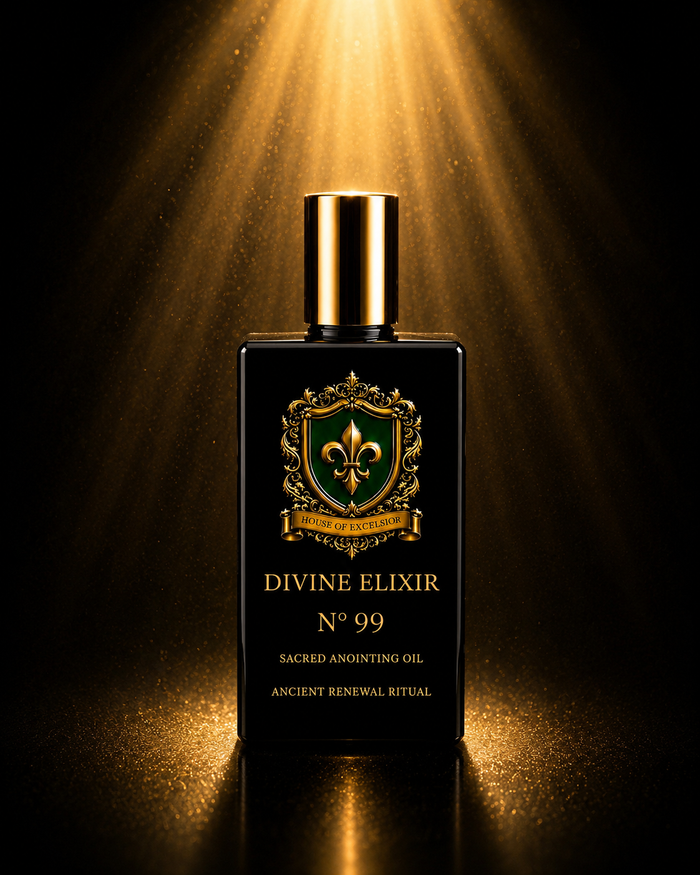
Divine Attar N° 99 was created as the fragrant companion to Divine Elixir N° 99, the House's precious Sidr-infused botanical anointing oil.
Both share the botanical language of Sidr, Frankincense, Myrrh and Damask Rose.
Yet each has its own place within the daily ritual.
Divine Elixir honours the body through anointing.
Divine Attar honours the moment through fragrance.
Begin with Divine Elixir after bathing, then finish with a touch of Divine Attar upon the pulse points.
Together, they create a harmonious expression of the House's aromatic heritage.
The Elixir anoints the body. The Attar anoints the moment.
A quiet invitation to transform an ordinary daily practice into something more meaningful.
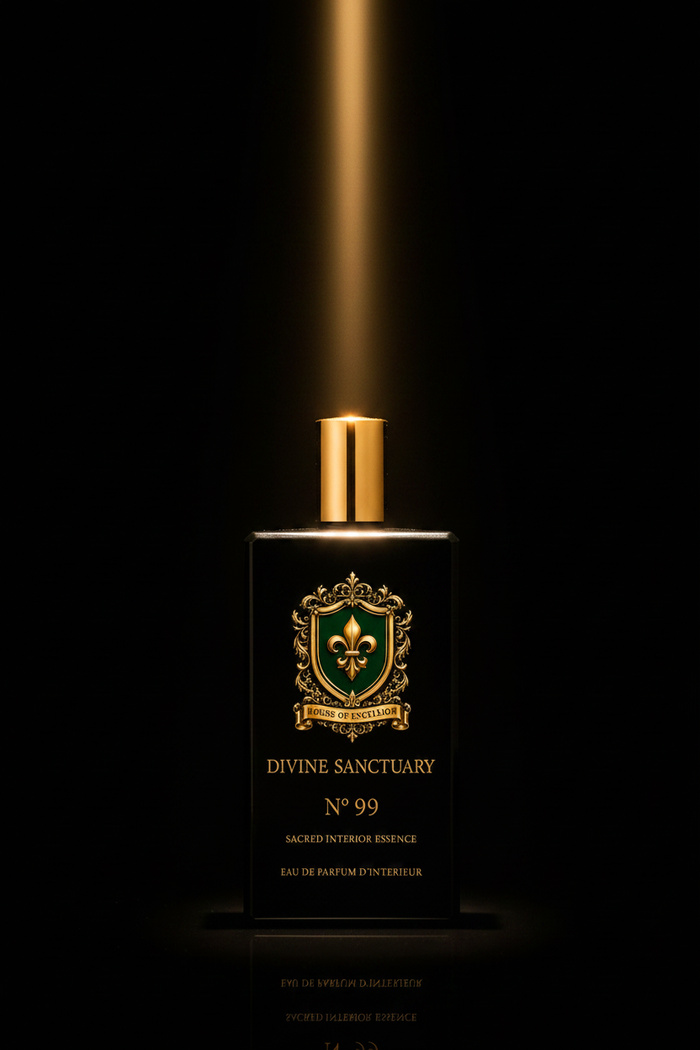
For the home, the same Signature Accord of Sidr, Frankincense, Myrrh and Damask Rose lives in Divine Sanctuary N° 99, our luxury Sidr room spray, created to purify and bless the spaces you live in. Wear the attar. Mist the sanctuary. Let one sacred scent follow you through the day.
Frequently Asked Questions About Attar Perfume
What is attar perfume?
Attar perfume is a traditional fragrance associated with precious aromatic materials, often carried in oil rather than alcohol. Traditional attars may be distilled into sandalwood oil, while contemporary attar perfume oils may also be created through carefully composed aromatic blends.
What is attar oil perfume?
Attar oil perfume is a concentrated fragrance carried in oil rather than alcohol, applied directly to the skin where it unfolds with warmth. The terms attar, attar oil and perfume oil are often used interchangeably. Divine Attar N° 99 is an alcohol-free attar oil perfume composed around Sidr, Oud and Saffron.
Is perfume attar the same as perfume oil?
The terms overlap, but they are not identical. Perfume oil is a broad term for oil-based fragrance. Attar refers more specifically to a historical fragrance tradition, although the word is also commonly used for contemporary oil perfumes.
What is oud attar?
Oud attar is a perfume oil featuring oud, the highly prized fragrant resinous wood associated with agarwood-producing trees. Its distinctive fragrance can be woody, resinous, smoky and richly complex.
What is Sidr attar perfume?
Sidr attar perfume incorporates Sidr into its botanical composition or identity. Divine Attar N° 99 combines Sidr with Frankincense, Myrrh, Damask Rose, Oud and Saffron as part of the House of Excelsior's signature fragrance.
Is attar perfume alcohol-free?
Traditional oil-based attars are alcohol-free. Divine Attar N° 99 is formulated without an alcohol carrier.
Is oud attar suitable for men and women?
Yes. Oud attar can be worn by anyone who enjoys its fragrance. Divine Attar N° 99 is intentionally unisex.
Is attar stronger than Eau de Parfum?
Not necessarily. Attar describes a perfume tradition and form, rather than a fixed concentration. Divine Attar N° 99 is created as an exceptionally concentrated Extrait de Parfum.
How long does attar perfume oil last?
Attar perfume oils may last around 3–6 hours on the skin, while some compositions can last up to 12 hours or longer. Longevity varies with the aromatic materials, concentration, amount applied, skin and climate.
How should attar perfume oil be applied?
Apply a small amount to the wrists, neck or behind the ears, allowing it to settle naturally on the skin. Patch test before use.
Where is Divine Attar N° 99 made?
Divine Attar N° 99 is artisan-crafted in limited batches in Australia by Divine Apothecary, House of Excelsior.
Where can I buy attar perfume in Australia?
Divine Attar N° 99 is available directly from Divine Apothecary, artisan crafted in limited batches in Australia and delivered Australia-wide. Discover Divine Attar N° 99 →
The First Language I Loved Was Fragrance
A Personal Reflection from the Founder
My love affair with perfume began long before I understood the art of perfumery.
As a little girl, I loved fragrance so much that my primary school teacher once complained to my mother during a parent interview that I was wearing too much perfume.
On another occasion, while visiting a perfume shop, a sales assistant questioned my mother.
“Madam, why do you allow a child to choose your fragrance?”
My beautiful mother simply replied:
“It's not for me. It's for her.”
Even then, fragrance was never an ordinary accessory to me.
I was captivated by its beauty, its character and the way a single scent could make me feel.
But among all the perfumes I have encountered throughout my life, one remains timeless.
Ispahan.
The last perfume my father gave me, for my twelfth birthday.
I still have that bottle.
Not because of its rarity, its fragrance notes or the name upon its label.
But because of the love and memory it holds.
Years have passed. Yet that bottle remains a treasured connection to my father. Perhaps this is why I have always believed that fragrance is far more than something beautiful to wear.
It can hold the memory of a person, a place, an entire chapter of our lives.
The Fragrance of What Remains
Perhaps the greatest beauty of attar is not found in the splendour of royal courts, the rarity of oud or the golden threads of saffron.
Perhaps it is found in something much more personal.
A rose garden in the warmth of summer.
The first rain upon dry earth.
The memory of a moment, or someone we love or miss.
A cherished place. A distant journey. A feeling of belonging, arrival or return.
This is the enduring beauty of perfume.
Its ability to make the invisible feel present.
Some fragrances are worn upon the skin. Others remain timeless and deep within the soul.
In Divine Attar N° 99, ancient botanical heritage meets a lifelong love of perfume, honouring God’s gift of nature, the memories we carry and those yet to be made.
With reverence and sincerity,
Azra ZK
Founder, Divine Apothecary by House of Excelsior
Born in Ancient Wisdom. For the Elevated Soul.
Explore: Divine Attar N° 99 · Divine Elixir N° 99 · Sidr: The Lote Tree of Paradise
Sacred Botanical Intelligence · The N° 99 Collection
Divine Apothecary by House of Excelsior
The Art of Sacred Renewal Rituals™
ANIMA EXCELSA
© 2026 Excelsior 99. All rights reserved.
Shop the Ritual